Big Data for Sustainability: How Analytics Drive Smarter Environmental Decisions
As global sustainability goals accelerate, Big Data has become a key enabler of informed environmental policy and strategy. Through predictive modeling, real-time monitoring, and cross-sector analytics, data is driving smarter decisions for a greener future.

As environmental challenges grow, leveraging advanced analytics and data-driven technologies has become essential for making informed decisions and working towards sustainability. These tools provide unique insights into environmental trends, resource management, and the impact of human activities. By applying these insights, governments, businesses, and individuals can make more informed choices. This powerful approach is reshaping how we address environmental conservation, resource optimization, and long-term planning.
Recent academic research highlights that the combination of Big Data, Internet of Things (IoT), and Artificial Intelligence (AI) is now regarded as a critical enabler for sustainability and policy development (Hajjaji et al., 2019, Napier Repository). By 2025, over 70% of global environmental agencies report that their decision-making is guided by real-time analytics (Springer, 2025).
Here, we explore how advanced data applications support improved environmental decision-making and their potential to create lasting positive impacts.
1. Tracking Environmental Changes in Real Time
Real-time monitoring of environmental changes is made possible through sensors, satellite imagery, and IoT devices. These technologies collect vast amounts of data on aspects such as air quality, deforestation, and water levels. Analyzing this information enables rapid responses to disasters like floods and wildfires and facilitates the implementation of preventive measures. For example, warning systems based on live data can support early evacuations, saving lives and minimizing property damage.
Continuous monitoring can also track changes in biodiversity and ecosystems. By measuring the impact of human activities, policymakers can implement more effective conservation strategies. For instance, tracking wildlife populations helps identify critical threats like habitat loss or poaching, enabling targeted interventions. In urban areas, air quality sensors provide ongoing updates, allowing authorities to issue health advisories or implement temporary restrictions on polluting activities.
According to Vicari et al. (2019) in Natural Hazards and Earth System Sciences, digital communication trails — including satellite and mobile data — can be used to assess urban resilience and disaster readiness. Similarly, a systematic review by Hajjaji et al. (2019) found that integrating IoT and Big Data in smart environmental systems creates “exciting opportunities for the protection and improvement of natural resources.” Such integrations enable predictive analytics that detect early signs of environmental stress before visible degradation occurs.
Real-time insights ensure decisions are based on current and accurate information, empowering governments and organizations to act swiftly and effectively.
2. Optimizing Resource Usage
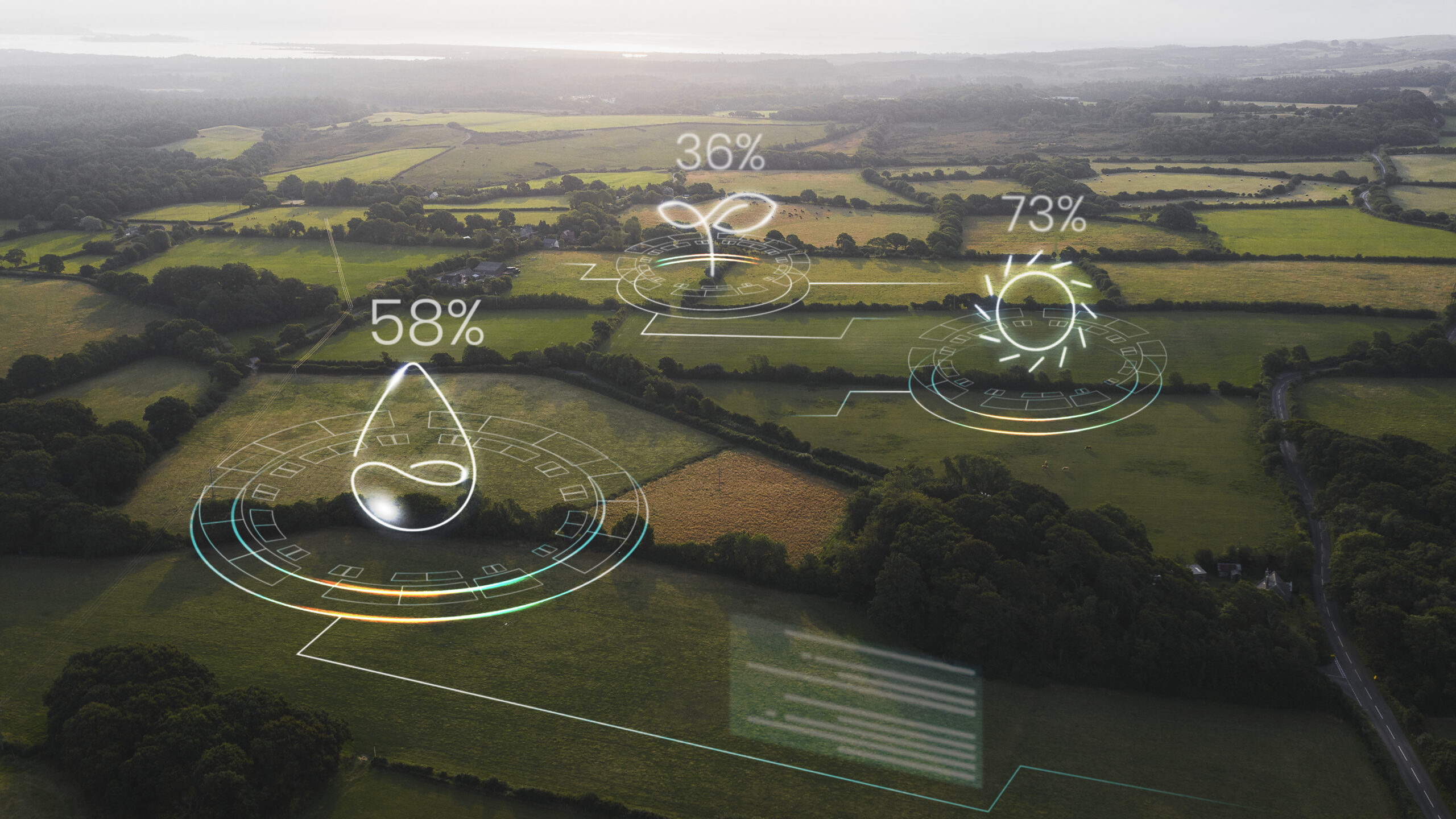
Efficient resource management is a cornerstone of sustainability. Advanced data analytics helps optimize the use of water, energy, and other resources by identifying consumption patterns and inefficiencies. Predictive models can prevent water shortages by highlighting demand spikes early. In agriculture, data-driven systems improve irrigation by ensuring better water distribution and reduced waste while maximizing crop yields.
Energy systems also benefit significantly from these insights. Smart grids use real-time consumption information to balance energy supply and demand more effectively, reducing waste and lowering operational costs. Industrial processes can also be streamlined by analyzing resource input and output, cutting down inefficiencies and reducing waste.
Research published in the Open Science & Technology Journal (Azmi, 2023) confirmed that IoT-enabled smart monitoring systems in agriculture can improve irrigation efficiency by up to 30% while conserving water resources. Likewise, a bibliometric analysis in Discover Applied Sciences (Springer, 2025) found that “data-driven governance and policy forecasting” have become dominant themes in environmental quality monitoring, underlining how big data now shapes global sustainability frameworks.
Collaboration across sectors can amplify these benefits. For instance, sharing energy consumption insights between cities and rural areas supports efficient renewable energy distribution. Such approaches reduce waste, support cleaner energy transitions, and lower costs, demonstrating the value of integrated, data-driven strategies for resource optimization.
3. Improving Climate Models
Climate models rely on large datasets, including historical weather patterns, greenhouse gas emissions, and ocean temperatures. Advanced analytics enhance the accuracy and detail of these models, enabling policymakers to devise targeted actions. Machine learning algorithms further refine models by simulating future climate scenarios and visualizing potential impacts, such as rising sea levels or extreme weather events.
Local and regional models also benefit from these advancements. Coastal regions, for example, can use tailored projections of sea level rise to prepare for flooding or storm surges. Similarly, agricultural regions can adapt planting schedules or choose more resilient crop varieties based on detailed climate forecasts.
A 2024 MDPI study on geospatial big data modeling demonstrated that fine-scale carbon emission maps, derived from multisource datasets, improve the precision of national and sectoral climate projections. Another systematic review (Makula & Khare, 2025, Journal of Computer Allied Intelligence) concluded that big data and machine learning significantly enhance the ability to predict climate change impacts on human health, supporting more targeted adaptation strategies.
These improved models not only aid disaster preparedness but also support long-term planning. By understanding potential scenarios, governments and organizations can design infrastructure, allocate resources, and implement policies to better mitigate climate risks.
4. Developing Sustainable Cities
Rapid urbanization has made data-driven planning essential for sustainable city development. Data supports improvements in infrastructure, traffic management, and energy efficiency. For example, smart cities use real-time insights to minimize energy waste and optimize public transport systems. Dynamic traffic systems adjust routes based on congestion, improving flow and reducing emissions to enhance urban mobility.
Waste management is another area that benefits from data integration. Sensors in waste bins can indicate when collection is needed, saving time and reducing CO2 emissions from collection vehicles. Analyzing waste patterns can also help identify opportunities to increase recycling rates and reduce landfill dependency.
Recent research in Discover Applied Sciences (Springer, 2025) shows that smart city initiatives powered by environmental data analytics contribute directly to carbon neutrality targets and urban resilience. The study highlights that integrating data across domains — energy, mobility, waste, and infrastructure — enables “predictive city management,” improving operational efficiency by 25% and reducing emissions by up to 15%.
Public safety and emergency response systems also leverage data to predict and mitigate potential problems, such as identifying flood-prone areas during heavy rains. By integrating data on energy use, mobility, and infrastructure, cities can become more efficient and resilient while minimizing their environmental footprint.
5. Raising Awareness and Driving Engagement
Big data helps educate people about environmental issues. Interactive dashboards and visualizations make complex data easy to understand, enabling individuals to make informed decisions. For example, apps can show residents how their energy use compares to their neighborhood or offer tips on saving energy. Social media platforms and websites often use big data analytics to personalize and amplify messages, increasing public engagement with environmental campaigns.
Education and training are critical to ensuring people understand how to interpret and use data. Workshops, online courses, and community events focused on data literacy can empower individuals and organizations to harness the full potential of big data. Additionally, sharing data with communities fosters support for environmental measures. When people see the impact of their choices, such as reduced waste or lower emissions, they are more likely to take proactive steps.
According to a 2024 study on IoT-driven environmental awareness (North-Press, 2024), public access to environmental dashboards correlates with a measurable increase in pro-environmental behaviors such as energy conservation and recycling. The study found that “transparency in data visualisation” drives higher engagement than traditional awareness campaigns. This suggests that open data platforms can be as impactful as regulatory interventions when designed with clear, visual storytelling.
NGOs and environmental organizations can also use big data to support awareness campaigns. By presenting facts and figures visually—through charts, infographics, and animations—they can engage and mobilize a broader audience. These campaigns can highlight pressing issues, such as deforestation or plastic pollution, and provide actionable steps for individuals and communities to contribute to solutions.
Conclusion
Big data is transforming how we understand and address environmental problems. From real-time monitoring to sustainable city planning, the possibilities are vast. Integrating big data into environmental decision-making is not just beneficial but necessary to build a resilient future. By leveraging advanced analytics, predictive models, and real-time data insights, we can tackle environmental challenges more effectively.
In summary, the academic consensus (Springer, 2025; MDPI, 2024; Napier Repository, 2019) confirms that Big Data-driven environmental decision-making directly supports the UN Sustainable Development Goals (SDGs), particularly SDG 11 (Sustainable Cities) and SDG 13 (Climate Action).
The topics discussed here—such as improving climate models, optimizing data storage, and driving awareness—are just examples of the ways big data can make a positive impact on our planet. If you or your organization want to explore these ideas further and learn more about Green IT, stay tuned for our upcoming course, Green IT Awareness, based on the Green IT Framework. This course will provide valuable insights to help you leverage technology for a more sustainable and innovative future.
Knowledge - Certification - Community