Beyond the Degree: Architecting Professional Resilience in the Agentic AI Era
By 2030, the World Economic Forum predicts that 39% of workers' core skills will be outdated due to automation. In an economy where the "half-life" of a technical skill has plummeted to just 2.5 years, a static education is no longer a shield - it is a liability. To lead in 2026, the practitioner must transition from a "linear" career to a "stackable" architecture of resilience, turning industry volatility into a strategic "Career Hedge."

By Mohammad Umaid
The rapid evolution of the digital era, characterized by the staggering generation of 2.5 quintillion bytes of data daily, has fundamentally redefined professional mastery. As a practitioner who has earned the distinction of being the World’s Most Diversified Digitally Credentialed Professional – with over 300 unique issuers validated on Credly – I have viewed my journey not as a collection of trophies, but as a blueprint for the “Resilient Workforce of 2026”. My path, built on verified expertise from global leaders like IBM, Microsoft, Google, and Red Hat, serves as a living demonstration for the DASCIN community: in the age of automation, the only true security is the ability to architect a diverse, stackable, and verifiable profile that moves at the speed of the market.
The Shift to Agentic Orchestration: Data Science Meets Action
We are entering the era of “Agentic AI,” where autonomous systems are projected to power 1,000% more customer interactions by 2027. This marks a shift from tools that simply answer questions to agents capable of executing entire workflows. For the DASCIN professional, this requires a multidisciplinary bridge. By combining IBM’s Data Science Methodology with Enterprise Design Thinking, a practitioner moves from being a “data consumer” to an “AI orchestrator”. This synergy ensures that AI agents are not just technically sound but are aligned with human-centric goals. Research shows that organizations using Design Thinking frameworks can reduce development time by up to 75% while significantly increasing ROI by ensuring insights are actionable and stakeholder-focused.
The Economic Value of “Stackable” Validation
In the 2026 workforce, “skills-first” hiring has become the non-negotiable standard. Globally, 96% of employers now state that digital credentials strengthen a candidate’s profile, with many offering a 10-15% salary premium for verified, in-demand skills. The Google Project Management Certificate serves as a prime example of this “stackable” ROI, providing 9 semester hours of ACE® recommended college credit. When stacked with specialized certifications like ISO/IEC 27001:2022 Lead Auditor or Cisco CyberOps Associate, it creates a “vertical” and “horizontal” defense for your career. This allows a professional to pivot between roles with immediate, verified authority, bypassing the multi-year lag of traditional academic cycles.
Responsible AI: The Trust Currency of 2026
As AI agents take over decision-making, the National Institute of Health (NIH) warns that data biases can actively worsen social inequalities if left unchecked. DASCIN’s mission emphasizes that technology without transparency is a risk. This is why a diversified portfolio must balance technical grit with moral governance. By integrating credentials in Cultural Humility, Inclusive Leadership, and Green IT, we ensure that the “Velocity” of our innovation does not outpace our ethical responsibility. In a world where 2026 will see agents operating on the front lines of cyber defense and financial compliance, trust is the only currency that will hold its value.
Conclusion: Your Verified Architecture
Ultimately, achieving the status of “World’s Most Diversified” is a testament to a new philosophy of work: the “Career Hedge.” In a market where workers with advanced AI skills already earn 56% more than their peers, remaining static is the greatest risk of all. By holding verified expertise across hundreds of domains—from Blockchain Foundations with HPE to Cloud Deployment and Sustainable IT—I have built a profile resilient to any single industry shift. My message to the DASCIN community is simple: stop viewing your career as a ladder and start viewing it as an architecture. The future belongs to those who verify their curiosity, one badge at a time.
About the author
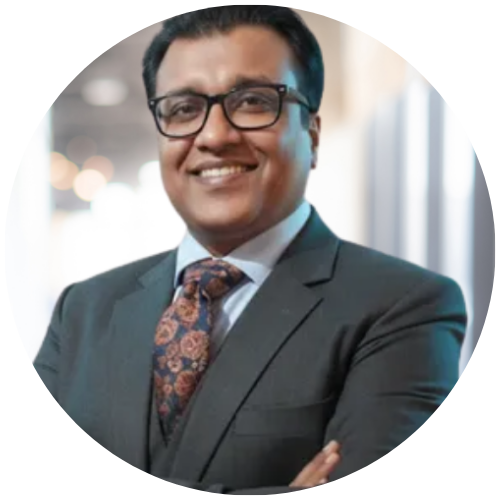
Mohammad Umaid
Mohammad Umaid is an educational entrepreneur and digital learning strategist with a strong focus on transforming academic and professional education. He serves as a DASCIN Ambassador and Business Partner for Academic Affairs at Al Fateh College, bridging industry needs with future-ready learning programs. As a LinkedIn Top Voice across multiple categories, he actively shapes conversations on education, leadership, and innovation. His work also includes advisory contributions to the International Pharmaceutical Federation and thought leadership pieces for Harvard Business Review.
Knowledge - Certification - Community