Understanding Data Analysis, Analytics, BI, and Big Data
Data analysis, analytics, business intelligence, and Big Data each play a vital role in enterprise success. From uncovering patterns to enabling predictive insights, understanding how these concepts connect is essential in today’s data-driven world.

Data Analysis, Analytics, Business Intelligence and Big Data
In the previous article, we discussed the characteristics of Big Data. This article provides an overview of the four different forms of pattern identification in data sets; the difference between Data Analysis, Analytics, Business Intelligence and Big Data.
In today’s rapidly evolving digital landscape, organizations that understand these distinctions can better utilize data as a strategic asset. With the rise of artificial intelligence (AI), cloud computing, and automation, the boundaries between these domains are increasingly interconnected—making data literacy more important than ever.
In the business and scientific domain, most organizations differentiate between four different forms of pattern identification in data sets:
- Data analysis
- Analytics
- Business Intelligence (BI)
- Big Data
Although all four definitions are closely related, there are some subtle differences between the terms that have an impact on the design of Big Data solutions.
Data Analysis
Data analysis is a process of inspecting, cleansing, transforming, and modeling data with the goal of discovering useful information, suggesting conclusions, and supporting decision-making. Data analysis has multiple facets and approaches, encompassing diverse techniques under a variety of names, in different business, science, and social science domains.
Data analysis – in the literal sense – has been around for centuries. The primary purpose of data analysis is to review existing data in order to describe patterns that have happened in the past. It is therefore also frequently referred to as descriptive data analysis. An example of data analysis would be to review the sales patterns of different stores over the past years.
Today, modern data analysis increasingly leverages automation and visualization tools such as Power BI, Tableau, and Python-based analytics libraries. This has made it easier for non-technical professionals to gain insights from data, accelerating the pace of decision-making across industries.

Figure 1: Data analysis – sales patterns in stores
Analytics
Analytics is the discovery, interpretation, and communication of meaningful patterns in data. Especially valuable in areas rich with recorded information, analytics relies on the simultaneous application of statistics, computer programming, and operations research to quantify performance.
Analytics encompasses a growing field of data science capabilities including statistics, mathematics, machine learning, predictive modeling, data mining, cognitive computing, and artificial intelligence.
There are four categories of analytics that organizations need to consider:
- Descriptive analytics
Descriptive analytics or data mining are at the bottom of the Big Data value chain but are valuable for uncovering patterns that offer insight. A simple example would be reviewing the number of people that visited the company’s website over the past few months. - Diagnostic analytics
Diagnostic analytics are used to determine why something happened. For example, in a social media campaign, diagnostic analytics can reveal which advertisements increased conversion rates. - Predictive analytics
Predictive analytics use Big Data to identify past patterns to predict the future. For instance, companies use predictive analytics for sales lead scoring or customer churn prediction. - Prescriptive analytics
Prescriptive analytics provides recommendations for the best course of action. In healthcare, prescriptive models can identify high-risk patient groups for targeted interventions.

Figure 2: Four different types of analytics and their increased value
Whereas data analysis aims to support decision-making by reviewing past data (i.e., descriptive or diagnostic analytics), analytics in the context of Big Data is primarily concerned with optimizing the future (i.e., predictive or prescriptive analytics).
For this purpose, analytics makes use of complex algorithms to find patterns in data in order to provide advice on the best possible course of action for an organization.
In 2025, analytics has become even more AI-driven, with tools like Azure Machine Learning, Amazon SageMaker, and Google Vertex AI automating model building, tuning, and deployment—reducing the barrier to enterprise-scale analytics adoption.
Business Intelligence (BI)
Business Intelligence (BI) comprises the strategies and technologies used by enterprises for the data analysis of business information. Business Intelligence uses both data analysis and analytics techniques to consolidate and summarize information that is specifically useful in an enterprise context.
The key challenge with Business Intelligence is to consolidate different enterprise information systems and data sources into a single integrated data warehouse on which analysis or analytics operations can be performed.
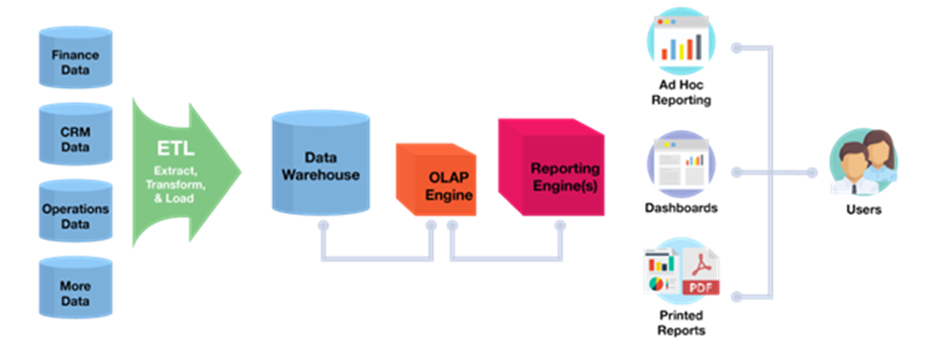
Figure 3: Structure of traditional business intelligence
A data warehouse is a centralized database that combines a variety of different databases from different sources. An example of Business Intelligence would be to build a management dashboard that visualizes key enterprise KPIs across divisions.
BI is evolving toward real-time and self-service analytics, enabling decision-makers to access insights instantly through cloud-based platforms like Microsoft Fabric and Google Looker. This marks a major shift from static dashboards to dynamic, intelligent insights.
Big Data
As discussed in the previous article, Big Data is characterized by four key characteristics—the four V’s. Big Data makes use of both data analysis and analytics techniques and frequently builds upon the data in enterprise data warehouses (as used in BI). As such, it can be considered the next step in the evolution of Business Intelligence.
Big Data, however, requires a different approach than Business Intelligence for several key reasons:
- The data that is analyzed in Big Data environments is larger than what most traditional BI solutions can handle and therefore requires distributed storage and processing solutions.
- Big Data is characterized by the variety of its data sources and includes unstructured or semi-structured data such as images, videos, or sensor logs.
In 2025, enterprises are increasingly using cloud-native Big Data ecosystems—such as Apache Spark, Databricks, and AWS Redshift—to manage complex, unstructured data at scale. Generative AI and agentic automation are also transforming how organizations process and analyze vast data streams.
The difference between Big Data and Business Intelligence is depicted in Figure 4:

Figure 4: Big Data includes unstructured data and requires distributed storage/processing


Knowledge - Certification - Community