Understanding Data Types and Data Structures
Data types and data structures are the foundation of modern data literacy. Discover how understanding these concepts improves analysis, organization, and decision-making in today’s data-driven world.

Introduction: Why Data Types and Data Structures Matter
Understanding data types and structures is fundamental in data literacy, serving as the cornerstone for effectively managing, analyzing, and deriving insights from data. In an era where data drives decision-making across various sectors, grasping the nuances of different data types and structures enables individuals and organizations to leverage this critical resource more efficiently. From enhancing business strategies to fostering scientific discoveries, the ability to categorize and interpret data correctly ensures that the information extracted is accurate, relevant, and actionable.
In today’s data-driven world, professionals who understand how to classify, store, and interpret data have a significant advantage in analytics, machine learning, and business intelligence roles.
Data comes in myriad forms, including numerical figures, text, images, audio, and more, each possessing unique characteristics and requiring specific handling techniques. By distinguishing between types such as primary and secondary data, or structured and unstructured data, one can apply the appropriate tools and methodologies for analysis. For instance, numerical data, whether discrete or continuous, necessitates different statistical approaches compared to categorical data, which can be nominal or ordinal. Similarly, understanding the properties of textual, image, audio, time-series, geospatial, and sensor data is crucial for selecting the right analytical frameworks and technologies.
Moreover, the distinction between structured, unstructured, and metadata plays a vital role in data management. Structured data, with its organized format, is easily searchable and analyzable, making it suitable for databases and spreadsheets. In contrast, unstructured data, such as social media posts and multimedia content, requires advanced techniques like natural language processing and image recognition for effective analysis. Metadata, which describes other data, enhances discoverability and usability, ensuring that data assets are well-documented and accessible. By mastering these core concepts, individuals can strengthen their data literacy and build the foundational knowledge required for advanced data management and analytics practices.
What Are Data Types?
Data types are essential elements in the realm of data literacy, providing a framework for how data is stored, processed, and analyzed. Understanding the various data types is crucial for anyone working with data, as each type has specific characteristics and requires different analytical techniques.
Data can come in many forms, including numbers, text, images, audio, and more, and each form can have significant implications for how it is used and interpreted. In this section, we will explore eight primary data types: numerical, categorical, textual, image, audio, time-series, geospatial, and sensor data, detailing their properties and applications.
Recognizing these categories helps data professionals choose the right analytical and visualization techniques, ensuring accuracy and efficiency in data processing.
The Eight Most Common Data Types
Numerical Data
Numerical Data
Numerical data is quantitative and can be classified into discrete and continuous data. Discrete data represents countable items and can only take specific values, such as integers (e.g., the number of students in a class). Continuous data, on the other hand, can take any value within a given range, such as temperature or weight, allowing for more granular measurements. Numerical data is fundamental in statistical analysis and is often visualized using graphs and charts.
Categorical Data
Categorical Data
Categorical data is used to group information into categories or labels. It can be further divided into nominal and ordinal data. Nominal data represents categories without any inherent order or ranking, such as hair color or types of fruits. Ordinal data includes categories with a specific order or ranking, like education levels (e.g., high school, college, graduate). Categorical data is often represented using bar charts or pie charts to show the distribution of categories.
Textual Data
Textual Data
Textual data consists of words and sentences in natural language. It includes data such as comments, reviews, and social media posts. Analyzing textual data involves natural language processing (NLP) techniques to extract meaningful information from unstructured text. This type of data is valuable for sentiment analysis, topic modeling, and other text mining applications.
Image Data
Image Data
Image data comprises digital images, such as photographs and videos. Each image is made up of pixels, and analyzing image data involves techniques from computer vision, such as image recognition and classification. Image data is widely used in fields like medical imaging, facial recognition, and automated vehicle navigation.
Audio Data
Audio Data
Audio data includes sound recordings, such as music, speech, or sound effects. It is represented as waveforms and can be analyzed for various applications, including speech recognition, music analysis, and sound classification. Techniques like Fourier transforms and machine learning models are commonly used to process and interpret audio data.
Time-Series Data
Time-Series Data
Time-series data consists of data points collected or recorded at specific time intervals. It is crucial in fields like finance, economics, and meteorology, where tracking changes over time is essential. Examples include stock prices, temperature readings, and economic indicators. Time-series analysis involves identifying trends, seasonal patterns, and cyclic behaviors in the data.
Geospatial Data
Geospatial Data
Geospatial data is geographic and includes information about locations on the Earth’s surface. It encompasses data such as coordinates, maps, and satellite imagery. This data type is essential for applications in geography, urban planning, and environmental monitoring. Geospatial data is analyzed using geographic information systems (GIS) to visualize spatial relationships and patterns.
Sensor Data
Sensor Data
Sensor data is collected from various sensors, such as those measuring temperature, pressure, or motion. This data type is critical in the Internet of Things (IoT) and industrial applications, where real-time monitoring and automation are necessary. Sensor data analysis involves processing large volumes of data to detect anomalies, predict maintenance needs, and optimize operations.
By understanding these diverse data types, professionals can improve their analytical precision, design better data pipelines, and make informed decisions supported by evidence-based insights.
What Is the Difference Between Data Types and Data Structures?
Understanding the distinction between data types and types of data structures is essential in data literacy. While data types refer to the inherent nature and characteristics of the data itself, types of data structures pertain to how the data is organized, stored, and managed. Both concepts are fundamental in data science and analytics but serve different purposes and have distinct implications.
In essence, data types describe “what” the data is, while data structures define “how” the data is stored and accessed.
Data types focus on the inherent nature of the data (numerical, categorical, textual, etc.), determining how data can be analyzed and visualized. Types of data structures, on the other hand, pertain to the organization and management of data (structured, unstructured, semi-structured, and metadata), influencing how data is stored, accessed, and processed. Understanding both aspects is crucial for effectively working with data in various applications.
Types of Data Structures
There are four common types of data structures:
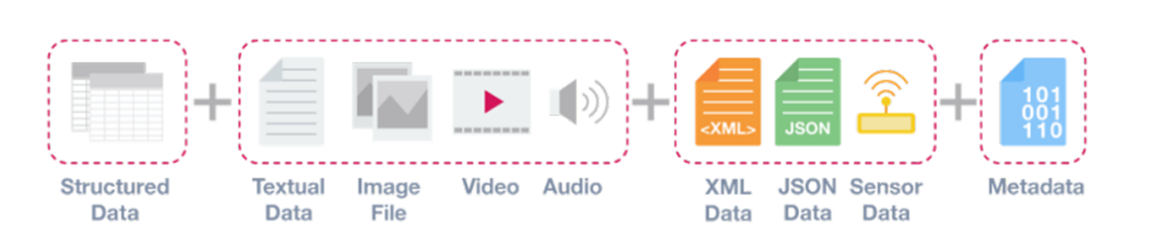
Figure 1: The Four Different Types of Data Structures
The four common types of data structures are visualized in the image above.


Knowledge - Certification - Community