Data Retention Policy Explained
A clear explanation of what a data retention policy is, why it matters, and how to structure one effectively.
What Is Data Retention?
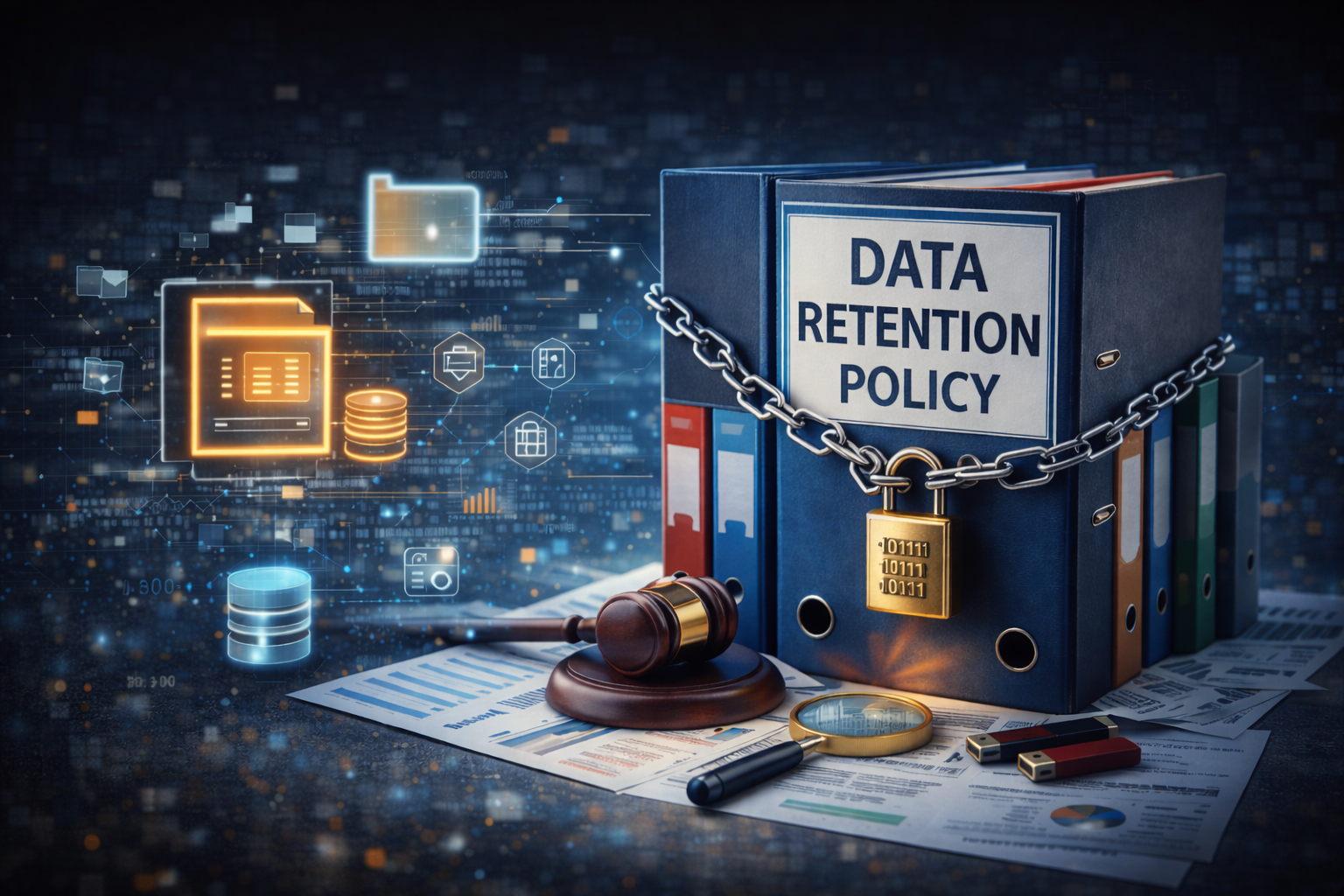
Data retention refers to the practice of storing data for a specified period before deleting or archiving it. Organizations use data retention policies to define how long they keep data, what types they retain, and who can access it. The purpose of data retention is to ensure organizations can access required information for legal, regulatory, and business needs while protecting privacy and security.
Data retention policies vary by data type, industry, and legal requirements. For example, financial institutions often retain customer data for several years to meet regulatory obligations, while healthcare organizations usually keep patient records longer to comply with privacy laws.
Effective data retention policies help organizations control data volumes, reduce storage costs, and lower breach risks. However, organizations must review and update these policies regularly to remain compliant with changing regulations.
Data retention also plays a central role in data governance. Organizations should retain personal data only for as long as necessary and delete it once it is no longer needed. Clear procedures and regular disposal processes support responsible data management.
The Need for a Data Retention Policy
Organizations need a data retention policy for several important reasons:
- Legal and regulatory compliance: Many industries must follow laws that specify how long organizations must keep certain records and how they must dispose of them. A clear policy helps prevent violations and penalties.
- Efficient data management: Defined retention periods prevent unnecessary data accumulation and reduce storage complexity.
- Data privacy and security: Shorter retention periods lower exposure to breaches and unauthorized access.
- Business continuity and risk management: A retention policy ensures organizations can recover essential data during incidents.
- Cost savings: Less stored data means lower infrastructure and maintenance costs.
In short, a data retention policy enables organizations to manage information responsibly while reducing operational and legal risks.
Data Retention Policies for U.S. Government Organizations
U.S. government organizations must follow mandatory data retention requirements.
The Federal Records Act requires federal agencies to preserve and manage records according to guidance from the National Archives and Records Administration (NARA). NARA defines how long agencies must retain different record types, and agencies must create policies that follow these rules.
State and local governments also enforce their own retention requirements. Additional industry regulations apply to healthcare, finance, and education sectors.
Non-compliance can lead to fines, legal action, and reputational harm. Therefore, public-sector organizations must maintain strong, compliant retention programs.
Data Retention Policies in Europe
In Europe, data retention is governed by the General Data Protection Regulation (GDPR). The GDPR stipulates that personal data should be retained only for as long as necessary to fulfill the purpose for which it was collected.
Organizations must also ensure secure deletion of personal data once it is no longer required, taking into account its sensitivity and potential risks.
A well-structured GDPR-compliant data retention policy is essential to maintain trust and transparency, especially for organizations that handle personal or sensitive data from EU residents.
Structuring a Data Retention Policy
Components of a Data Retention Policy
A strong data retention policy clearly defines:
- Purpose: Why the policy exists
- Scope: Which data and systems it covers
- Retention periods: How long each data type is stored
- Access controls: Who can access and manage data
- Compliance processes: How the organization enforces the policy
- Exceptions: When data must be retained longer
- Review cycle: How often the policy is updated
Organizations should involve legal, IT, security, and business teams during development and review.
Approval of a Data Retention Policy
Approval typically involves multiple groups:
- Legal department
- IT department
- Security team
- Business unit leaders
- Executive leadership
In some organizations, board-level approval may also be required. Broad involvement strengthens ownership and accountability.
Draft Data Retention Policy Template
Here is a draft template for a data retention policy:
- Introduction
This policy establishes how the organization manages, retains, and disposes of data in line with legal, regulatory, and business requirements.
Purpose: To ensure data is stored, used, and disposed of responsibly, while meeting compliance obligations and industry best practices.
Scope: This policy applies to all data created, collected, stored, or processed by the organization, regardless of format or location. - Retention Periods
Define how long different data types must be kept, including financial records, customer data, and employee information.
Determine retention durations based on legal obligations, business needs, and best practices.
Specify whether data will be deleted or archived once the retention period ends. - Access Controls
Define who may access data and who manages it.
Require appropriate security controls to protect sensitive information.
Monitor and review access regularly to ensure compliance. - Compliance
Establish procedures to support compliance, including audits, reviews, and staff training.
Define actions for non-compliance, such as corrective measures or disciplinary steps. - Exceptions
Identify permitted exceptions, such as data required for legal proceedings.
Define an approval process and evaluation criteria for exceptions. - Updates
Review and update the policy regularly to reflect changes in laws, technology, and business needs.
Assign responsibility for maintaining and communicating updates. - Conclusion
This policy supports effective data management, legal compliance, and risk reduction. All employees must follow this policy to ensure proper handling, storage, and disposal of organizational data.
Note that this is just a sample template, and the specific requirements of your organization’s data retention policy may differ based on your specific needs, laws and regulations, and other factors. It is important to work with legal, IT, security, and business departments to develop a comprehensive and effective data retention policy that meets the needs of your organization.
Conclusion
A data retention policy explained approach helps organizations manage data responsibly, maintain compliance, and reduce operational risk.
By defining retention periods, access controls, and disposal procedures, organizations create a consistent and defensible approach to data lifecycle management. Ultimately, strong retention practices support trust, accountability, and long-term sustainability.
Knowledge - Certification - Community