
The technology sector accounts for roughly 4% of global greenhouse gas emissions, which is comparable to aviation. As regulations tighten and organizations race toward net-zero, the question is no longer whether IT needs to go green, but who has the expertise to make it happen.
4%
of global GHG emissions from the ICT sector
2
official DASCIN Green IT certifications
official DASCIN Green IT certifications
APMG
internationally certified examinations
internationally certified examinations
What is Green IT certification?
Green IT certification is a structured credential that validates a professional’s knowledge of sustainable IT practices, including energy-efficient hardware, responsible e-waste management, carbon emissions measurement, data center optimization, and regulatory reporting under frameworks such as CSRD and GRI.
Unlike generic sustainability courses, DASCIN’s certifications are grounded in the DASCIN Green IT Framework, a structured approach to embedding sustainability across every layer of IT operations: strategy, hardware, software, processes, data storage, and reporting.
DASCIN currently offers two official Green IT certifications, each designed for a different stage of the learning journey.
The 2 DASCIN Green IT certifications

Official certification
Both certifications are examined by APMG International, one of the world’s leading examination institutes, which provides credentials with genuine global market recognition.
What does the Green IT Foundation cover?
The Foundation program goes significantly deeper than Awareness, with seven modules mapping directly to the seven components of the Green IT Framework: Strategy, Hardware, Software, Processes, Practices, Data Storage, and Measurement & Reporting.
Participants master the Green IT Impact Measurement Framework; a rigorous mathematical model to calculate Scope 1, 2, and 3 emissions and determine a composite Green IT Impact Score (GIIS), enabling verifiable progress communication to stakeholders.
Key practical skills include building a formal nine-element Green IT Strategy, applying Software Carbon Intensity (SCI) to optimize code, using PUE and WUE metrics to improve data center efficiency, and delivering reports aligned with GRI, CSRD, and ESRS E1 while identifying and avoiding greenwashing patterns in reporting.
The program also addresses organizational change, teaching professionals how to overcome the four forms of stakeholder resistance (awareness, capability, incentive, and political) and embed the PDCA (Plan-Do-Check-Act) cycle for continual, measurable improvement.
Who needs a Green IT certification?
Green IT sits at the intersection of technology, strategy, procurement, compliance, and culture. These credentials are relevant across a wider range of roles than you might expect:
IT Managers & Admins: Practical tools to optimize infrastructure, manage asset lifecycles, and reduce energy consumption.
Sustainability Officers: Speak credibly about IT’s environmental footprint and collaborate on technical reduction strategies.
Procurement Professionals: Incorporate ENERGY STAR and EPEAT sustainability criteria into hardware and software purchasing decisions.
Compliance Officers: Navigate CSRD, SECR, and SEC climate disclosure mandates with confidence and structured knowledge.
Business Leaders: Align IT investment with net-zero goals, investor expectations, and corporate social responsibility commitments.
Students & Career Switchers: Differentiate yourself with green credentials that are growing rapidly in market demand.
Why certification matters more than ever
The “nice to have” phase for green IT knowledge is over. Several forces are converging to make formal credentials increasingly important:
How to get started
 Free guide — no credit card required
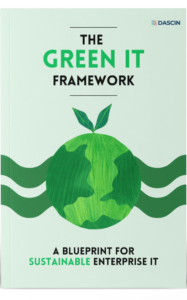
The practical guide to building a sustainable IT operation.
This guide provides organizations with a clear and structured approach to building more sustainable IT operations and reducing environmental impact through practical Green IT strategies.

