Data Products and Big Data Solutions
Data products and Big Data solutions are transforming how enterprises extract value from their data. From user-friendly analytics applications to large-scale systems like Hadoop, these technologies form the foundation of the modern data-driven enterprise.

Data Products and Big Data Solutions
Working with data and performing data analysis and analytics operations requires specialized knowledge. In most organizations, business users are only interested in finding the outcomes and solutions to certain questions – they require a data product.
Data Products
A data product is an application that runs data analysis or analytics operations upon a certain input, and mostly has an easy-to-understand user interface. The users of data products do not exactly understand all underlying algorithms and are only able to run certain queries to find specific answers. Building data products can therefore be considered one of the key objectives of Big Data.
In recent years, data products have become increasingly automated and intelligent, incorporating machine learning and AI-driven capabilities. These advancements allow for real-time analytics, personalized recommendations, and predictive insights—making data products central to enterprise decision-making.
Due to the growing interest in Big Data and its increased use in enterprise organizations, many data products have been developed. Commercial software companies bundle many data products together and license these as Big Data solutions to enterprise organizations.
Today, even small and mid-sized companies are leveraging cloud-based Big Data tools such as Snowflake, Databricks, and Google BigQuery to create lightweight yet powerful data products without needing extensive infrastructure investments.
Data Solutions
Big Data solutions are a quick way for enterprises to start leveraging the potential of Big Data analysis, because enterprises do not need to develop all required data products in-house. The downside of (commercial) Big Data solutions is that they are often expensive, and it is difficult to alter any of the underlying algorithms of the Big Data solution.
However, the rise of open-source and cloud-native ecosystems has begun to change this dynamic. Many organizations now adopt hybrid strategies combining commercial Big Data platforms with open frameworks to maintain both flexibility and cost-efficiency.
There are many Big Data solutions available on the market and almost every large Enterprise IT provider (Google, Amazon, Microsoft, SAP, etc.) now offers one or more Big Data solutions. Additionally, start-ups play a very important role in the development of Big Data solutions because they come up with new and innovative data products.
According to the latest IDC and Gartner reports, global Big Data and analytics spending continues to grow at over 12% annually, with enterprises increasingly focused on scalable, ethical, and secure data platforms. This trend highlights the urgent need for professionals skilled in enterprise data management and analytics frameworks.
DASCIN’s Enterprise Big Data Framework provides vendor-neutral guidance to help organizations build effective data strategies, architectures, and analytical capabilities aligned with industry best practices.
Examples of Popular Big Data Solutions
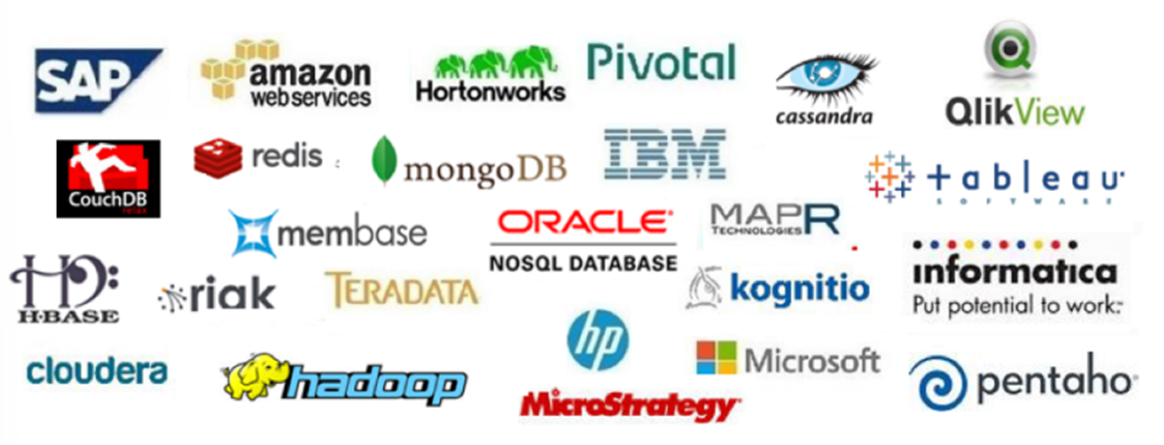
Figure 1: Examples of popular Big Data solutions
Hadoop
It would not be possible to discuss Big Data solutions without mentioning Hadoop. Hadoop is an open-source software framework used for distributed storage and processing of datasets of Big Data using the MapReduce programming model. It consists of computer clusters built from commodity hardware. All the modules in Hadoop are designed with a fundamental assumption that hardware failures are common occurrences and should be automatically handled by the framework.
However, it is important to note that most Big Data solutions make use of the Hadoop framework as their underlying software framework. The term ‘Hadoop’ has therefore also become known as the ecosystem that connects different Big Data solutions (and commercial vendors) together.
While Hadoop remains foundational, modern Big Data architectures now integrate with advanced tools such as Apache Spark, Kafka, and Delta Lake to enable real-time data streaming and analytics. These innovations continue to redefine how enterprises manage and extract insights from massive datasets.
Knowledge - Certification - Community