Machine Learning
Machine Learning is transforming how enterprises use Big Data to make smarter, faster decisions. Discover the difference between supervised and unsupervised learning, and how DASCIN’s Enterprise Big Data Framework courses can help you develop the skills to build intelligent, data-driven systems.

Machine Learning
The domains of Big Data and Machine Learning (ML) are deeply interconnected, and their relationship has grown even stronger in recent years. Machine Learning focuses on building algorithms that can learn from data, recognize patterns, and make predictions, enabling computers to make decisions with minimal human intervention.
At its core, Machine Learning aims to “teach” computers to learn from experience by using algorithms that analyze vast quantities of data, improving accuracy over time. This allows enterprises to uncover trends, detect anomalies, and make proactive decisions that drive competitive advantage.
Machine Learning is also a cornerstone of data mining, which involves sifting through massive data sets to discover hidden insights and previously unknown relationships. Together with Big Data, ML helps organizations move from descriptive analytics (what happened) to predictive and prescriptive analytics (what will happen and what to do next).
The Two Main Types of Machine Learning
Machine Learning models are broadly classified into two main types:
- Supervised Machine Learning
- Unsupervised Machine Learning
These two domains define how computers are trained to interpret and act upon data.
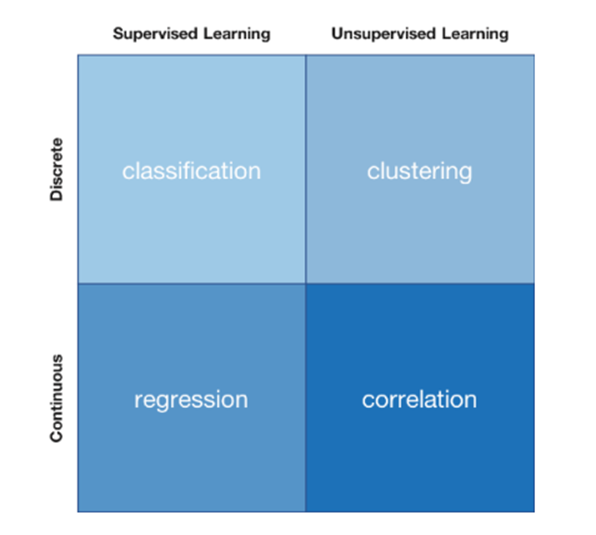
Figure 1: The main machine learning domains
1. Supervised Machine Learning
In supervised learning, a computer is trained using labeled datasets, meaning the input data comes with known outcomes. The algorithm “learns” from this data by identifying relationships between inputs and outputs. Once trained, it can then make accurate predictions when faced with new, unseen data.
This approach is commonly used for classification and regression problems.
2. Unsupervised Machine Learning
In unsupervised learning, the system is provided with unlabeled data and must find hidden patterns or structures on its own. This approach is particularly valuable when human expertise is not available to categorize data in advance.
Unsupervised learning techniques, such as clustering and correlation analysis, are often used in data mining to identify groups, trends, or anomalies within massive datasets.
Machine Learning in the Context of Big Data
While Machine Learning can be performed on smaller datasets, its true potential emerges when combined with Big Data. With today’s vast digital ecosystems — from IoT sensors to social media to enterprise databases — machine learning models thrive on the volume, velocity, and variety of data available.
Big Data provides the raw material; Machine Learning provides the intelligence to extract meaning and value. Together, they form the foundation of data-driven decision-making, predictive analytics, and artificial intelligence (AI) in modern enterprises.
From automating customer insights to optimizing operations, the synergy between Big Data and ML continues to reshape industries — making it a critical skill set for the next generation of data professionals.
Knowledge - Certification - Community