Introduction to Robotic Process Automation
Robotic Process Automation (RPA) is a technology that allows organisations to configure software — commonly referred to as a "bot" or "robot" — to execute repetitive, rule-based tasks across digital systems.

Key Takeaways
What Is Robotic Process Automation?
Robotic Process Automation (RPA) is a technology that allows organisations to configure software – commonly referred to as a “bot” or “robot” – to execute repetitive, rule-based tasks across digital systems. These tasks are the kind that a human employee carries out by opening an application, reading data, entering information, making decisions based on fixed rules, and moving on to the next step. A bot does all of this faster, without breaks, and without the risk of transcription errors.
The word “robotic” in RPA does not refer to a physical machine. There is no hardware involved. The robot is entirely software – a program that mimics human interactions with computer interfaces, such as clicking buttons, reading fields, copying data between systems, and submitting forms.
RPA has become one of the fastest-growing areas of enterprise technology because it solves a problem that is both universal and surprisingly difficult to fix through traditional IT means: the enormous volume of manual, structured work that happens inside organisations every single day.
Why RPA Exists: The Manual Work Problem
In virtually every medium and large organisation, there are processes that run entirely on human effort applied to digital systems. An accounts payable team receives an invoice, opens the ERP system, locates the purchase order, checks the figures match, enters the invoice data, routes it for approval, and marks it as processed. A human resources team receives a new employee’s documents, enters their data into the HRIS, creates their email account in Active Directory, registers them in the payroll system, and sends an onboarding confirmation email.
These processes are:
- Rule-based – the same steps are executed the same way every time
- High-volume – they happen hundreds or thousands of times per month
- Error-prone – manual data entry creates mistakes that cost time to fix
- Low-value – they consume skilled employees’ time without requiring their judgment
Traditional software development could automate many of these tasks, but doing so typically requires modifying underlying systems, engaging development teams, lengthy testing cycles, and significant investment. RPA takes a different approach: instead of changing the systems, you teach a bot to use the systems the same way a human user does.
How RPA Works: The Technical Basics
An RPA bot operates by interacting with the presentation layer of applications — the same screens, menus, and input fields that a human user sees. This is the fundamental reason RPA is fast to implement: it does not require access to databases, APIs, or back-end code.
The typical lifecycle of an RPA bot involves three phases:
1. Recording and design
A process analyst observes the manual task, breaks it down into its individual steps, and uses an RPA development tool to design the bot’s workflow. Some platforms allow developers to literally record themselves performing the task, with the tool generating the automation sequence automatically.
2. Development and testing
The bot is built, configured with the logic for any decisions it needs to make (for example: “if the invoice amount exceeds $10,000, route to senior approver”), and tested against real data to confirm it behaves correctly.
3. Deployment and monitoring
The bot is deployed to run either on a schedule, triggered by an event (such as an email arriving), or on demand. Its performance is monitored, exceptions are managed, and it is updated when the underlying application changes.

What RPA Can and Cannot Do
Understanding where RPA performs well – and where it does not – is essential for any professional working in automation.
RPA is well-suited to tasks that are:
- Highly repetitive and follow consistent rules
- Based on structured, digital data (not handwritten forms or ambiguous documents)
- Carried out across one or more standard applications
- Stable — the underlying applications and processes do not change frequently
- High-volume enough that automation provides measurable time savings
RPA is less suited to tasks that involve:
- Unstructured data (for example, reading a free-text email and understanding its meaning without AI assistance)
- Frequent exceptions that require human judgment
- Processes that change constantly, requiring the bot to be updated as often as it runs
- Creative decision-making or stakeholder negotiation
When RPA attempts to handle highly variable or unstructured work without additional intelligence layered on top, the result is brittle automation that breaks frequently and creates more maintenance overhead than it saves.
RPA vs Traditional Automation vs AI
RPA is frequently confused with two related but distinct concepts: traditional workflow automation and artificial intelligence.
- Traditional automation refers to programmatic scripts or system integrations built directly into back-end infrastructure. It is typically faster and more reliable than RPA, but requires access to systems’ underlying code and APIs. RPA’s advantage over traditional automation is that it works even when system access is unavailable, making it deployable in weeks rather than months.
- Artificial intelligence refers to systems that can learn from data and make judgment-based decisions. RPA, in its basic form, cannot learn — it follows fixed rules. However, the combination of RPA with AI capabilities (natural language processing, machine learning, computer vision) has given rise to what practitioners call Intelligent Process Automation (IPA) or Cognitive Automation. This is now a mature and rapidly growing area of the profession.
The practical framing is this: use RPA for structured, rule-based work; use AI for interpretation and judgment; combine both for end-to-end automation of complex processes.
What Organisations Achieve with RPA
The reported outcomes from successful RPA implementations are consistently strong across industries. Common benefits include:
- Processing speed: Bots execute tasks significantly faster than humans – often completing work in seconds that would take a human minutes.
- Accuracy: By eliminating manual data entry, RPA removes the most common source of processing errors.
- Availability: Bots operate continuously, including outside business hours, enabling processes to complete overnight or across time zones without human staff.
- Scalability: During peak periods (month-end close, open enrolment, tax season), additional bot instances can be deployed rapidly without the lead time required to hire staff.
- Compliance and auditability: Every action a bot takes is logged, creating an automatic audit trail that supports regulatory compliance.
- Employee satisfaction: When repetitive manual work is automated, employees are freed to focus on higher-value activity – which consistently correlates with higher job satisfaction scores in organisations that have measured it.
RPA in Context: The Service Automation Framework
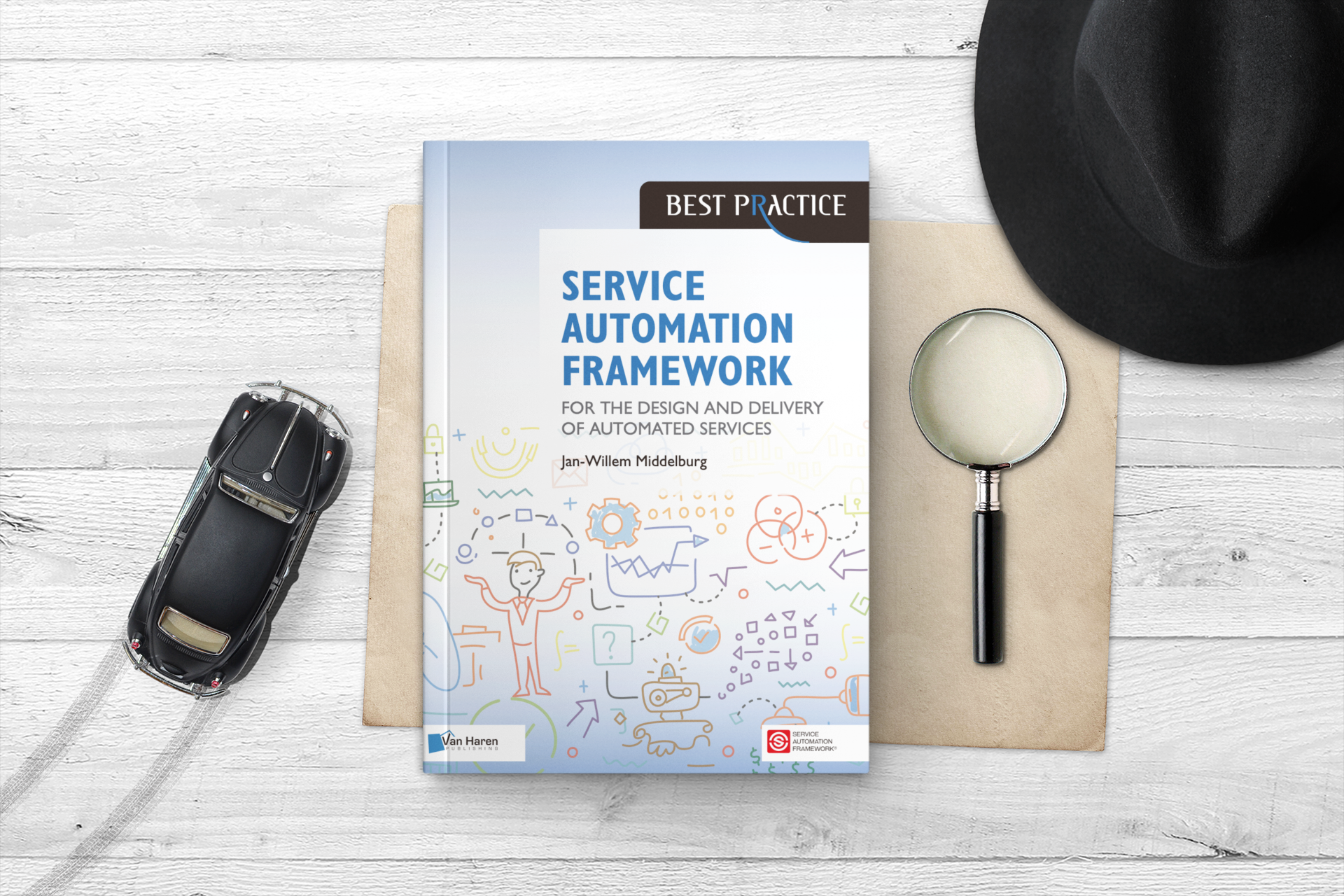
DASCIN’s Service Automation Framework (SAF) provides the structured methodology within which RPA should be understood, selected, and governed. RPA is one capability within a broader automation landscape- the SAF defines how organisations should assess their automation readiness, select the right tools and techniques for each process, manage their automation portfolio, and measure the value delivered.
Understanding RPA in isolation is useful. Understanding RPA within the SAF gives professionals the context to make sound architectural and governance decisions – which is exactly what separates a practitioner from a technician.
Who Should Learn RPA?
RPA skills are relevant to a wide range of professionals, not only developers:
- Business analysts who need to identify, document, and prioritise automation candidates
- IT professionals responsible for deploying and maintaining bots in production
- Process owners and operations managers overseeing automated workflows
- Project managers leading RPA implementation programmes
- Finance, HR, and operations professionals whose teams are undergoing automation programmes and who need to understand what is being done and why

The DASCIN RPA Foundation credential is designed for professionals who are new to RPA and want a structured, vendor-neutral grounding in the discipline. It covers: the core concepts of RPA, the types of processes suited to automation, the bot design and development lifecycle, governance and risk management, and the RPA professional’s role within a wider service automation strategy.
The credential is platform-independent – it equips you with the conceptual framework to work effectively with any RPA toolset, whether UiPath, Automation Anywhere, Blue Prism, or another platform.
Knowledge - Certification - Community