Big Data Competitive Advantage: Strategy and Business Value
Explore how organizations use big data strategy and analytics to gain competitive advantage and outperform competitors.

Achieving a big data competitive advantage has become a central goal for modern enterprises. Since the rise of large-scale digital systems, information has been a strategic asset. Organizations with better customer insights, industry knowledge, and operational data can outperform competitors more consistently.
Historically, innovative systems such as American Airlines’ electronic reservations, Otis Elevator’s predictive maintenance, and American Hospital Supply’s online ordering platforms dramatically increased both revenue and reputation. These early examples demonstrate how information-driven innovation creates lasting business value.
The Growth of Big Data
The rapid growth of Big Data has elevated the idea of information as a strategic asset to a new level. Organizations now compete not only on data accuracy, but also on their ability to process massive data volumes, at high speed, and from diverse sources.
Gaining access to new information faster than competitors creates a window of opportunity to act first. In a survey by IDG, 78% of enterprises agree that data strategy and Big Data analytics have the potential to fundamentally change how their business operates within the next one to three years.
Recent research confirms this trend. According to IDG’s 2024 Data and Analytics Report, enterprises analyze an average of 400 distinct data sources, while large organizations often exceed 1,000 active streams. This growth increases the need for automation, integration, and governance to maintain data quality.
Furthermore, in 2025, the convergence of generative AI and advanced analytics is strengthening big data competitive advantage. AI-enabled pipelines now support real-time insights, scenario simulation, and automated decision support.
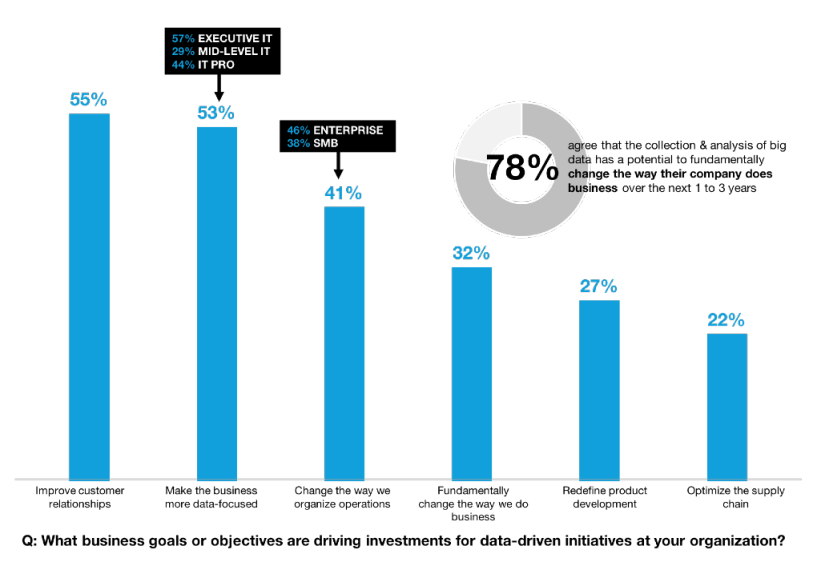
Figure 1: Big Data provides organizations with a competitive advantage
Competitive Advantage of Big Data
Big Data provides competitive advantage by improving decision quality, operational efficiency, and customer experience. Organizations that successfully transform raw data into actionable insights can respond faster to market changes and identify new opportunities earlier than competitors.
The Importance of Big Data Strategy
Although most enterprises recognize the value of Big Data, many remain behind the curve. Studies show that less than half of structured data is actively used in marketing decisions, and less than 1% of unstructured data is analyzed. At the same time, analysts spend nearly 80% of their time locating and preparing data.
The main reason organizations struggle to achieve big data competitive advantage is the absence of a clearly defined Big Data strategy. In many companies, Big Data remains project-based instead of being embedded across the organization.
In 2025, experts emphasize that Big Data strategies must include AI readiness, data ethics, and regulatory compliance. Organizations that align with governance frameworks and emerging regulations scale more effectively and build trust in AI-driven outcomes.
To avoid these challenges and achieve long-term advantage, the Big Data Framework begins with defining and formalizing a Big Data Strategy. All subsequent activities should align with this strategic foundation.
Knowledge - Certification - Community